
When should you meditate?
When is the best time to meditate? The answer depends on your life. Here's how to build a consistent daily practice, find the ideal times to meditate, and understand why I recommend twice a day.
By Clint
I was discussing this with some students in our WhatsApp channels the other day and thought it would be helpful to others.
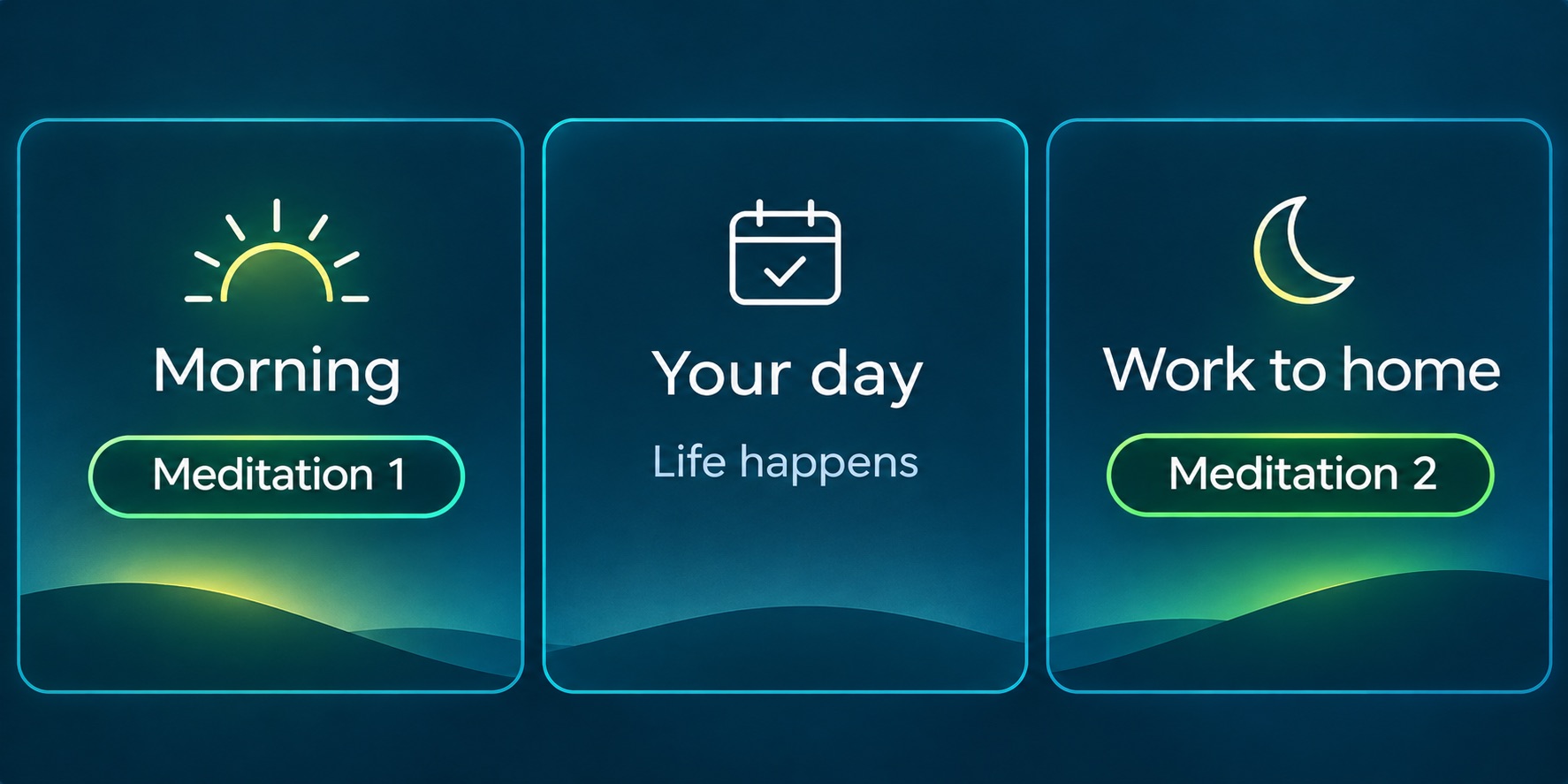
The Real World
The first important point is to disconnect the idea of "when" from "where" and say that you should meditate WHENEVER you can. In line at the store, sitting in the back seat of an Uber. In the parking lot before you go to work. Often students get when and where connected in their minds. I mean, who doesn't prefer meditating in calm, quiet locations?
The issue with this mindset, of course, is that it sets up all kinds of blockers for habit formation. "Oh, it's too loud here, I can't meditate." "Oh, Clint said I should meditate first thing in the morning and I missed it, I guess now I have to wait until tomorrow to try again." Neither of these things means you can't or shouldn't meditate. The first major step in building a daily practice is to let go of preferences and expectations and just do it. Every day. Consistently.
So, first lesson here? When should you meditate? Whenever you can fit it into your busy life. Even during a SpongeBob movie! This is by far the most important place to start.
The Ideal World
OK, so the next thing to consider is when you do have a choice, and the challenge isn't fitting it in but getting the most out of it. Here are some general guidelines:
- Focus first on a twice-a-day routine. (More on this below.)
- For your first meditation, meditate first thing in the morning.
- Get up, pee, splash some cold water on your face. Then meditate.
- If you exercise, you can exercise first, then meditate to transition into the start of your day.
- For your second meditation, meditate in the evening before you cook or begin to prep your evening meal.
Tips:
- Meditate before large meals. Meditating after large meals almost guarantees an unpleasant experience listening to your tummy rumble, and can cause discomfort and drowsiness during meditation.
- Meditate when switching between large, diverse tasks or projects. Meditation can provide a useful mental reset when context switching between diverse activities that require a different mindset or fresh perspective.
- Meditate 90 minutes or more before sleep. For some people, meditation aids in sleep; for others, it can interfere with sleep. People who do meditation retreats often report they don't sleep much during or after them. The mind gets a different type of rest in meditation, and some longtime meditators frequently report it's as if their bodies react to that with "no sleep needed." At least at the start of building a daily practice, I would avoid meditating within 90 minutes of bedtime until you understand how it affects you.
- Avoid drugs (unless prescribed by a doctor) and alcohol before meditation.
- It's not that you can't have a glass of wine and meditate, but more often than not students report they either fall asleep or feel no meditative effects when under the influence. Or they just think about the Doritos they are going to have next. Not in itself a bad thing, but probably not helpful to the reason you are meditating.
- I strongly advise against what I describe as "experience seeking." Meaning, taking drugs with the specific intent of meditating to induce a particular type of enlightened experience. Drugs can impair judgment, intensify anxiety, or trigger serious psychological distress even without meditation. Combining the two can increase these risks. It can also be counterproductive because it confuses an altered state of consciousness with genuine effects that lead to insight and lasting transformation. Our goal in building a daily practice isn't to manufacture experiences, but to develop a clearer, healthier relationship with everyday experiences.
- Some students also report ungratifying experiences after caffeine or large amounts of sugar. Both can activate the nervous system in a way that conflicts with the goals of meditation. Others find caffeine a helpful aid to meditation to cultivate a clear mental state. This will vary greatly from person to person, but if you are just starting out, you might avoid caffeine and sugar right before meditating until you understand how they affect you and your body in particular.
I wrote this assuming a 9-5, weekday work schedule, but my advice can be easily adapted for other lifestyles: meditate first after you wake fully rested, and again at the boundary of work life and home life, or midway between waking and sleeping on weekends.
Why twice a day?
There is no right or wrong about how many times a day to sit for a formal meditation session. This can vary greatly based on lifestyle. I have some students who are retired and can meditate 4 times a day, no problem. Others with very active commitments struggle to fit even one in. Regardless of your situation, I strongly recommend you start with a target of 2 formal sessions per day.
Here's the logic. Most meditators share a common experience: the effects of meditation decay over time. Right after you meditate, you feel calm, grounded and less reactive. You think clearly and feel less emotional. Then, throughout your day, you notice stress, agitation, frustration and defensive behaviors creeping back in. That second meditation, somewhere around the midpoint between waking and bedtime, is a critical "refill" of that state of mind that benefits you throughout your day. It replenishes your "social points," or refills your "adaptation energy," as I talked about in Meditation Isn't Just About How You Feel When You Meditate.
A useful analogy is warmth from a fireplace. It's cold in your house. You start a fire and the house fills with cozy warmth. Over time, the fire starts to go out and coldness creeps back in, until you add more wood to the fire. If you consistently add more wood at the right times, the house stays nice and warm.
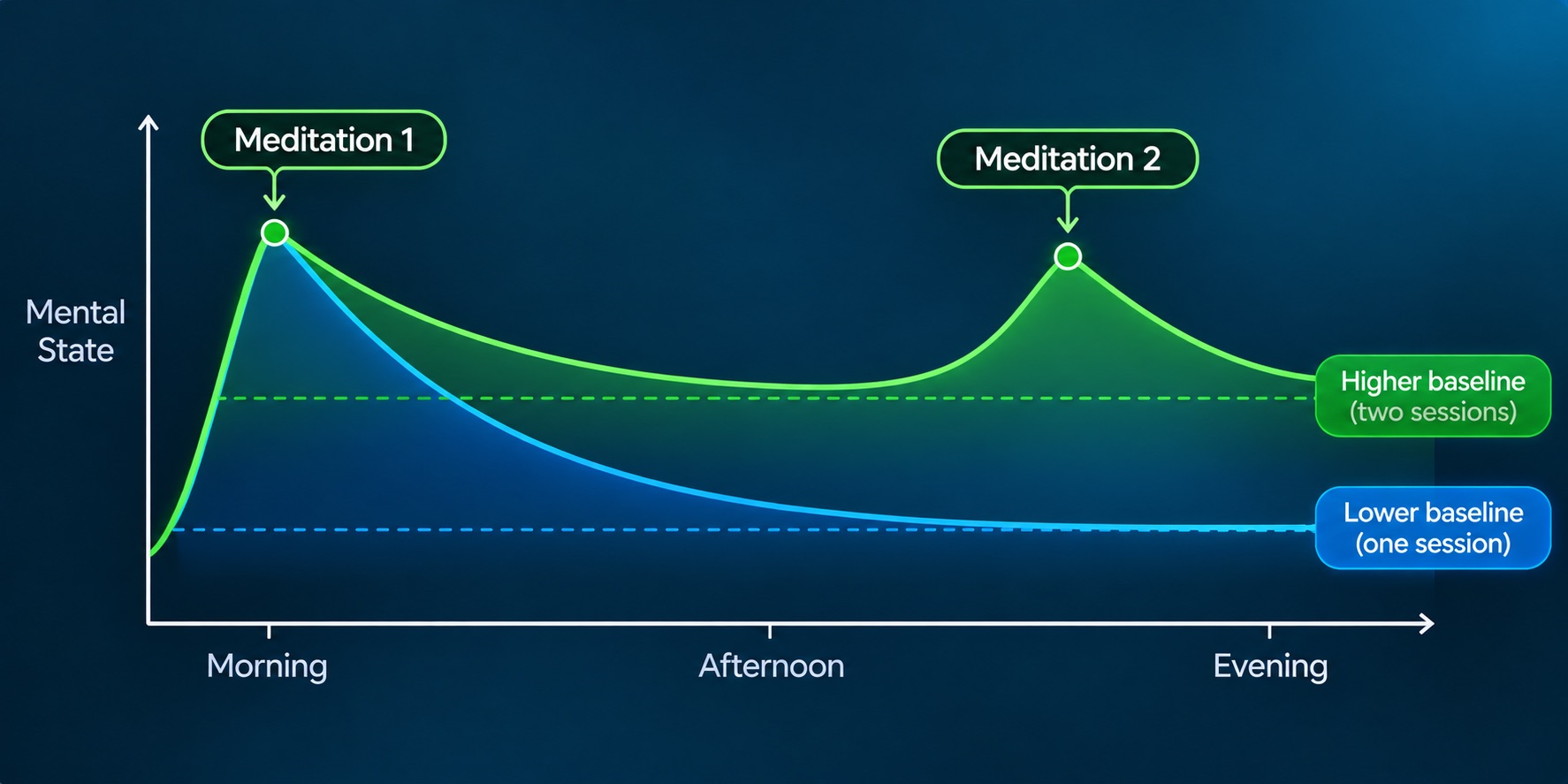
This is how meditation can feel. By meditating multiple times a day, the calm, clear awareness you cultivate is available to you consistently as the demands of your day come and go, not only in the morning after your first meditation session.
For those of us with stressful jobs, this is even more important. A meditation between work life and home life can be critical in not letting the stresses of the work day bleed into family or home life.
Consistency Over Perfection
As you plan your practice, the most important thing is to meditate at all, whenever you can fit it in. Don't let the recommendations for ideal conditions become another reason to skip meditation. A meditation at the "wrong" time is almost always better than a meditation you never do.
With that said, as your habit becomes established, these recommendations can really start to matter. For many students, two sessions a day is the difference between experiencing meditation as a simple relaxation technique and as a tool that enables profound life changes.
Work toward two sessions a day, ideally one in the morning and another around the transition between work and home. Think of it like keeping a fire burning. Regular practice helps you maintain that sense of calm, clarity and balance throughout the day, rather than only experiencing it immediately after meditation.
Want to comment on this post? Read it on Substack and join the conversation.
Keep reading
The Effort Knob - Finding the Right Intensity for Meditation
Understanding how to adjust the intensity of your meditation practice, from posture and alertness to attention and concentration.
Practice tipsDo You Need a Timer to Meditate?
Exploring the different ways to keep track of time during meditation, from simply watching a clock to using dedicated meditation timers.
Practice tipsWhy group meditations?
I was skeptical that meditating on Zoom with other people could be any different from meditating by myself. Then I tried it. Here's why group meditation helps a practice stick.
Start with a free 30-minute conversation
Tell me what you're looking for. You'll leave knowing which practice fits you and how to begin. There's no cost and no commitment.
New to meditation? Join a free monthly intro session.
Prefer to write? Send me a message.