

1Calm
Settle your body and mind, and let stress go.
Simple, easy techniques that allow the mind to settle naturally, without force. No uncomfortable positions, no impossible attempts to stop your thoughts.
More on calmThe approach
Meditation is the formal practice of cultivating calm and settling, awareness and clarity, and heart and connection. Mindfulness runs through all three. It's the quality of attention that makes meditation work, and it's what you take off the cushion into the rest of your day. I bring the many styles, techniques and traditions of meditation together into one easy-to-understand framework, the three C's, grounded in a modern understanding of the nervous system. Everyone can learn all three, whether you are one person, a community group or a whole company.
Settle your body and mind, and let stress go.
Simple, easy techniques that allow the mind to settle naturally, without force. No uncomfortable positions, no impossible attempts to stop your thoughts.
More on calm
See clearly and respond instead of react.
Sharpen your awareness by leveraging techniques to develop mindfulness, both during meditation and in daily life.
More on clarity
Open the heart and feel more connected.
Develop a baseline mental state towards positive, supportive thoughts and emotions.
More on connectionThe effort knob
I don't lock you into one tradition or one technique. Different practices take different levels of effort, and you learn to choose the right one for where you are today. Turn the knob down when you need support and up when you have more capacity. Over time you become your own guide.
Good when you feel overwhelmed, stressed, tired, distracted or new to meditation.
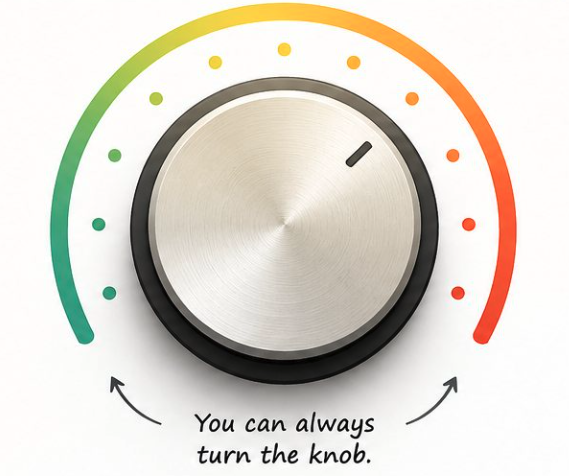
Good when you feel settled, clear and ready to go deeper.
Calm comes first. Most people arrive tired but wired. Techniques like breathwork, a guided body scan and mantra meditation give the nervous system a way to settle. This is where guided practice is most useful.
Clarity trains the mind to see clearly. Once you can settle, the guided recordings drop away. Practices like See Hear Feel and a mindful body scan train attention directly, so you notice what's happening without getting pulled around by it. In insight meditation you settle first, then turn that clear attention onto a chosen object of contemplation to understand it more deeply.
Connection opens the heart. Metta (loving-kindness), gratitude and affirmations turn a settled, clear mind toward other people and toward yourself.
Mindfulness runs through all three. It's the attention that lets you rest on the breath in a calm practice, see clearly in a clarity practice and stay with a kind wish in a heart practice. Off the cushion, the same skills become mindful walking, eating, listening and working.
Learning a technique is the easy part. Keeping a practice going is the hard part, and that's where a teacher helps. You get your questions answered, you work through the common sticking points, and you practice with a community every week.
Apps and AI can share information, but they can't meditate with you or respond to what actually happened when you sat down.
Tell me what you're looking for. You'll leave knowing which practice fits you and how to begin. There's no cost and no commitment.